
Personal scientists are curious about everything, which means this newsletter could easily become an unfocused mess if I just wrote up everything I learned each week. Instead, I try to consolidate ideas around specific themes that deserve coherent treatment.
To kick off 2026, here’s a look at what’s in the hopper—ideas I’m actively researching and will develop into future posts as they mature.

Testing & Measurement
SiPhox results incoming: Regular blood testing is one of the most insightful diagnostics a personal scientist can do and it’s time for a comprehensive update. (See PSWeek221117). I recently completed another round of SiPhox testing and will report the results soon—still waiting on answers to a few questions about interpretation. Between that and my previous Function Health panels (PSWeek240912), I have enough comprehensive blood data that I’m not planning to try the newer competitors (Mito Health, UltraHuman). Unless somebody convinces me otherwise, the marginal information isn’t worth the marginal cost.

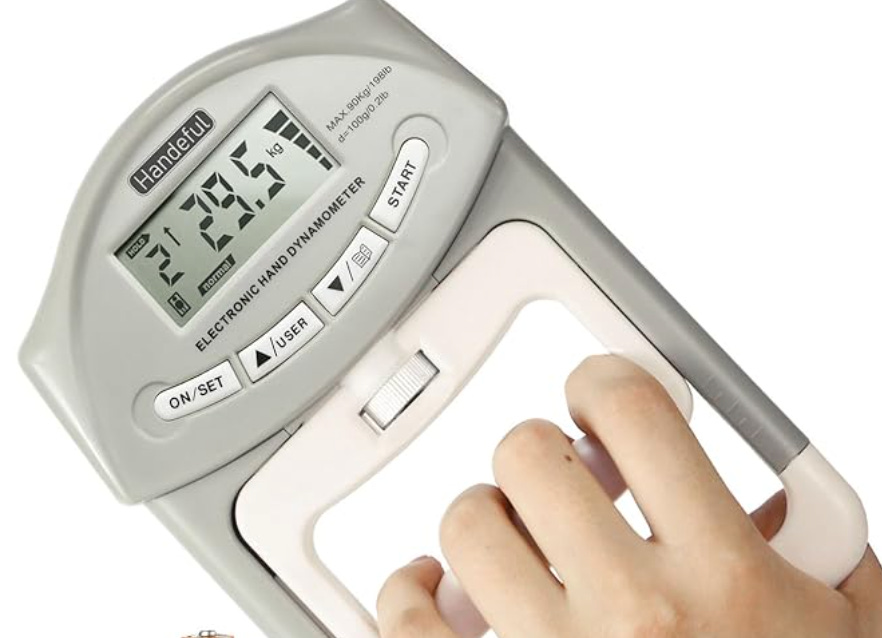
Grip strength with calipers: I’ve been playing with digital calipers to measure wrist/grip strength—a surprisingly robust longevity biomarker. Expect a post on methodology and what the numbers actually mean.
Nitric oxide test strips: Someone pointed me toward at-home NO measurement, and I have test strips waiting to be tried. Nitric oxide is involved in everything from vascular health to exercise performance, but I’m skeptical about what a simple strip can actually tell you. We’ll see.
Reaction time as cognitive biomarker: Following up on the Seth Roberts BRT work (PSWeek250703), I’m collecting more data on what actually moves the needle on cognitive performance. Alex Chernavsky’s intriguing results with Metformin have me excited about trying more things for myself. Sleep timing, specific supplements, stress—all candidates for systematic testing now that LLMs democratize the tools and analysis.
and speaking of cognitive performance, I’ve been playing with a bunch of vagus nerve stimulation tools (see PSWeek250625), so this will be the year that I put them to a serious test.
AI & Personal Science Tools
Doubling down on Claude: I continue to use ChatGPT and Grok a fair bit, but this year I’m going deep on Anthropic’s tools, especially Claude Code. Of all the frontier models, Claude feels the most cutting-edge for the kind of work personal scientists do—iterative reasoning, careful analysis, and the ability to work through complex problems step by step. I expect significant improvements throughout 2026 and will continue to track them closely.
Beyond Claude, I’m watching several AI tools relevant to personal science: FutureHouse for literature synthesis and hypothesis generation (see PSWeek250612), Elicit for academic paper analysis (PSWeek240222), PodSnacks to keep up with the torrent of interesting podcasts (PSWeek251120), and the various “Deep Research” modes now appearing in ChatGPT, Perplexity, and Grok (PSWeek250227). The landscape is evolving fast, and I want to keep up on what actually proves useful versus what’s just impressive demos.
The bigger question: AI agents that can design and iterate on experiments. For personal scientists, the dream is an AI that proposes hypotheses, designs n-of-1 protocols, analyzes results, and suggests next steps. We’re not there yet, but the trajectory is clear.
Nutrition & Metabolism
Home Cooking: My experiments with home breadmaking (PSWeek250911) raised bigger questions about why something so fundamental to civilization could possibly be unhealthy, as many health gurus claim. Are there other examples of traditional foods that, with some tweaking, might be healthier than we think? How about different varieties of rice, potatoes, or the shelf of fats like butter or lard?
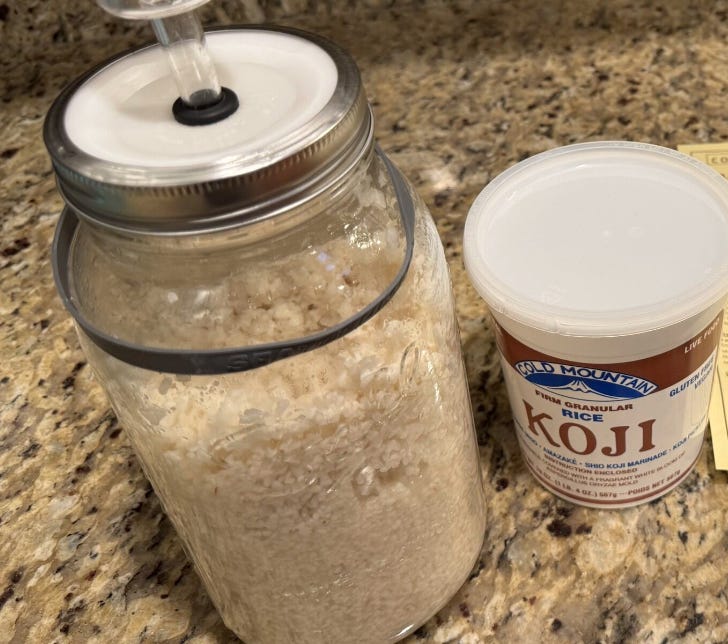
Fermentation: I’ve been making koji, sourdough, and of course kefir, but maybe this year I’d like to try kombucha again. And maybe some homemade “farmer” cheeses.
The “attention as active ingredient” hypothesis: A theme that keeps emerging—whether it’s tracking apps, dietary frameworks, or biohacking protocols—is that structured attention itself might be doing most of the work. The measurement creates the behavior change. I want to explore this more systematically.
Philosophy of Personal Science
The Google Effect and instant answers: What does it mean to live in a world where any factual question can be answered in seconds? This isn’t just about convenience—it fundamentally changes how we should think about knowledge, expertise, and learning. When answers are free, what becomes valuable? When you can look up anything, what’s worth memorizing? How should we move through life differently when uncertainty about facts is optional?
Books vs. LLMs—a personal reckoning: My book-reading has plummeted since LLMs arrived, and I want to understand why. Is it that I’m getting the same information faster? That dialogue with an AI is more engaging than monologue from an author? That I’m losing something important—depth, serendipity, the slow accumulation of a thinker’s worldview? Or is this simply a more efficient way to learn, and nostalgia for books is just that—nostalgia?
Philosophy of science, properly: I want to go deeper on epistemology this year—how we know what we know, the structure of scientific revolutions, the limits of empiricism. I’ve already explored Strevens’ The Knowledge Machine (PSWeek221229) Hasok Chang (PSWeek251023), Heidegger (PSWeek240822) and others. Lately I’ve become interested in Bas van Fraassen, who Redditors rank as one of three most important living philosophers. The question is whether I’ll learn more from reading the primary texts or from lengthy investigations with Claude. Probably both, but the ratio is an open question.

Expert disagreement and epistemic humility: We’ve discussed replication crises, citation chains built on sand (e.g. PSWeek250723 on the spinach/iron myth), and the limits of peer review. But the bigger question remains: how should personal scientists decide who to believe when credentialed experts disagree?
Ideological Turing Tests for health claims: Personal scientists are open-minded but skeptical. Unless you understand all sides of an argument, you don’t understand anything (See PSWeek230824). There’s a lot more we can do to expand the range of interesting and non-intuitive ways we can approach controversial subjects.
What’s Not in the Hopper (Yet)
Some topics that keep getting suggested but haven’t made my active list—either because they’re outside my expertise, my risk tolerance, or simply not where my curiosity currently leads:
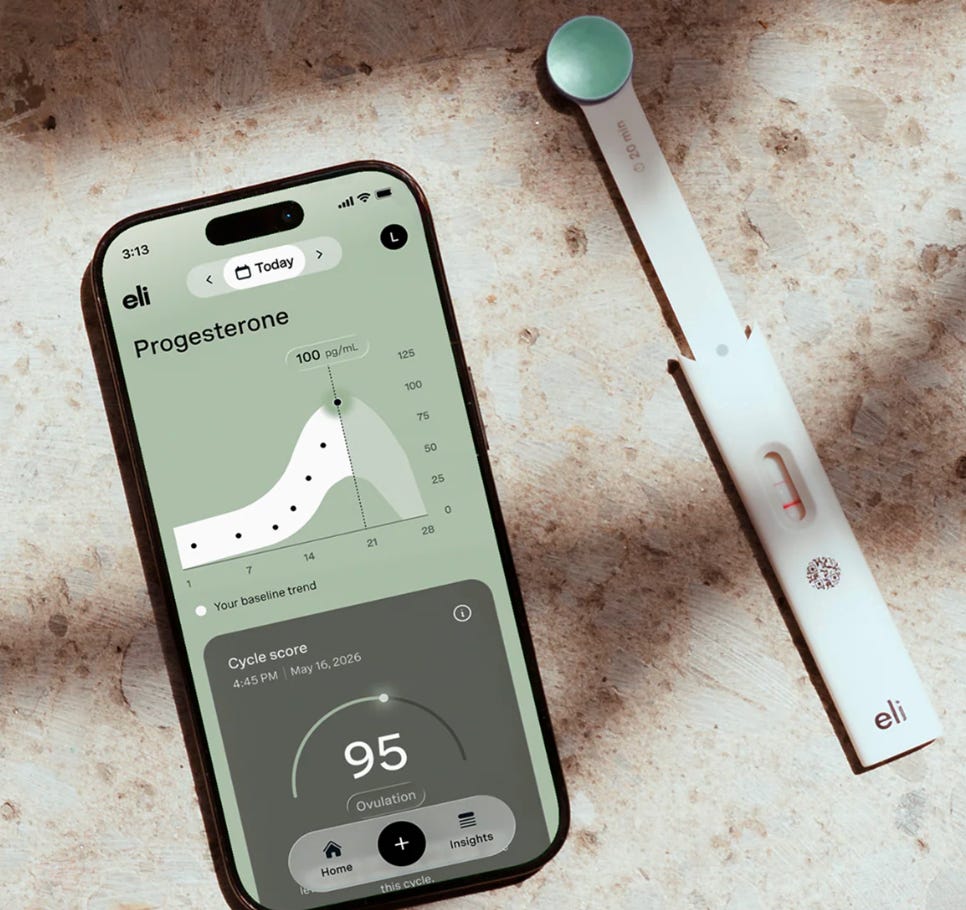
Women’s health and hormones: At-home hormone testing (like Eli Health’s Hormometer for cortisol and progesterone) is increasingly accessible, and there’s real personal science potential for tracking cycles, fertility, and menopause. But this isn’t my area. If a reader wants to collaborate on a guest post about women’s health self-tracking, I’d love to hear from you.
Rapamycin and other longevity pharmaceuticals: Interesting but I need better ways to figure out if they’re actually working. I know the current set of bioage measurements don’t cut it (See PSWeek250327).
Psychedelics for cognitive enhancement: Same concern—too much regulatory and personal risk for me. (See PSWeek240822)
Genetic engineering DIY: Fascinating (the Bionomica Labs stuff), but I lack the wet lab skills.
Guest contributors: Many of our readers are doing experiments that are beyond my expertise and interest. If you’re doing rigorous self-experimentation and want to share your work, let us know. This could be anything from the topics above to something entirely different. The only requirements: genuine curiosity, honest data, and a willingness to be proven wrong.
About Personal Science
The motto remains: Nullius in verba—take no one’s word for it.
We’re skeptical about everything, including our own conclusions. We listen to experts but think for ourselves. We run our own experiments because waiting for large-scale studies means waiting forever for questions that matter only to us.
Personal Science Week is delivered each Thursday to people who use science for personal rather than professional reasons. If you have topics you’d like to see covered—or experiments you’re running that deserve attention—let us know.
Here’s to a year of curious, skeptical, open-minded experimentation.
What’s in your hopper for 2025?
Thanks for the reference to my metformin observation. I'm still taking the metformin daily, and my reaction time is still faster than it was before I started. My new study, which I started yesterday (Jan. 1) is to test the effect of creatine supplementation. I did a creatine study in 2024 (results were inconclusive), but I think my dose of creatine was too low and the study had some design flaws. I'll let you know in a few months what I find out.