
You’ve been wearing a fitness tracker for years. Isn’t it time to make a thorough long-term analysis with actionable, non-obvious conclusions?
This week we’ll point to a deep analysis made by a fellow personal scientist, and show how new AI tools make it possible to do a similar report for yourself in minutes.

Alex Chernavsky (see PSWeek251113) is at it again with a report showing how he tracked five years of exercise https://www.self-experiments.org/five-years-of-exercise-tracked/
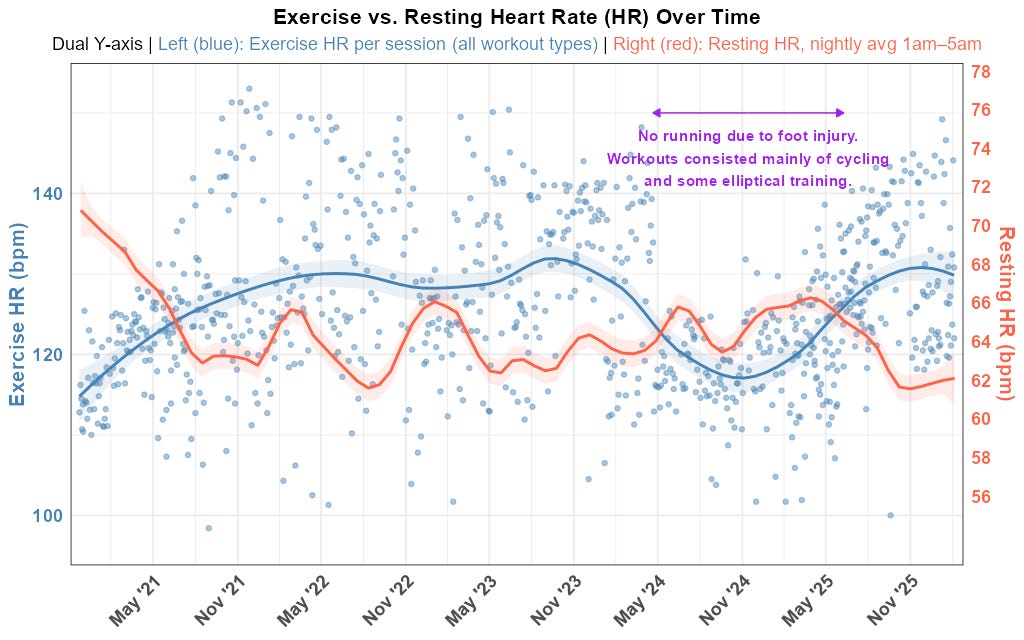
With the assistance of Claude Code, I analyzed more than 640 hours of running, cycling, and elliptical workouts collected over five years. The clearest gains in fitness came early: my resting heart rate fell by about eight beats per minute in the first year and stayed lower afterward. Running pace improved quickly before leveling off, even as training continued. Despite a long break from running due to plantar fasciitis, cross-training preserved most of my aerobic capacity. Different activities produced distinct intensity patterns, with the elliptical often matching or exceeding the effort of cycling. Although Claude Code exhibited some flaws, it ultimately proved to be a very useful partner in making sense of the data.
Any good personal science analysis should produce results that are
Non-Obvious
Actionable.
Too many self-experiments use complicated math to “discover” obvious advice your mother already gave you for free (“running will improve your fitness”), or information that you can’t do anything about anyway (e.g. “I ran faster when I was younger”).
So it’s inspiring to see that Alex’ analysis gave him some worthwhile takeaways: elliptical training works better for him than sprint cycling, and a prolonged injury doesn’t wipe out his gains.
Let Claude do everything
But to get his data, Alex used a cumbersome data export via the Auto Health Export app (see PSWeek230413). Once he had the data on his desktop, he used Claude to write software to do the analysis which led to the charts you see. Although new LLMs make programming much easier than in the past, he still estimates it took him 15-20 hours over a couple of weeks—and time and effort commitment that few of us can repeat, inspiring as it is.
Now that Claude can access Apple Health directly, I wondered if I could skip that export step and jump straight to the analysis.
Here’s my entire prompt:
My friend just did an analysis of his health data and wrote about it here. I think you have direct access to my Apple health. Can you show me a plan for how you might make the same kind of report only except using Alex and his data, use my data and what you know about me. His report is https://www.self-experiments.org/five-years-of-exercise-tracked/. For the first version I’d like a report that simply focuses on exercise and the items mentioned by Alex (exercise vs RHR over time and exercise intensity). I don’t do running so those items are less necessary.
After a few minutes of churning, Claude came back with a report as detailed as the one Alex had painstakingly generated but using my own Apple Watch data.
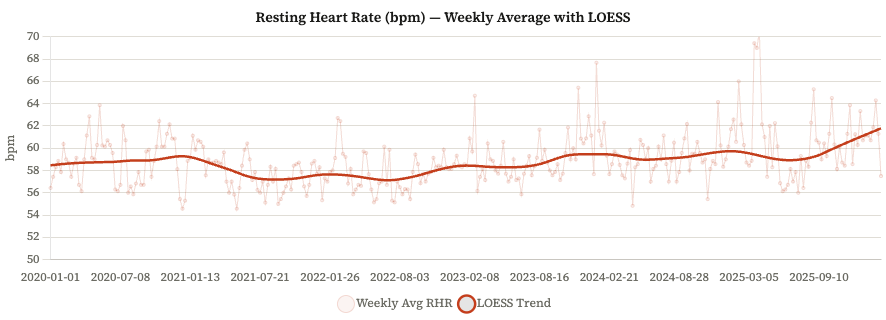
It concluded with this about me, which is more concerning:
For your age group, normative SDNN is approximately 40–80 ms; current values remain well within the population range, but the direction of change combined with rising RHR suggests declining parasympathetic tone rather than a benign aging effect alone.
It’s now worthwhile for me to dig more deeply into my exercise habits, where I’ll look especially at some actionable results. Another task for Claude!
Personal Science Weekly Readings
If you listen to any popular wellness-related podcast, you’ll have heard about AG1 (”Athletic Greens”). Scott Carney did a deep-dive takedown of the “science” behind their claims in a 3 1/2 hour video that also reviews the hype from other top health influencers. tldr; don’t trust any of their health claims. Like we said when we first mentioned AG1 back in PSWeek241017, “it’s an expensive way to get extra nutrition”.
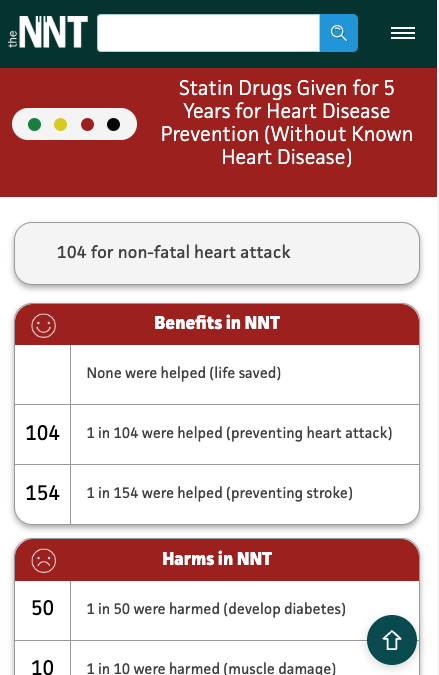
NNT (Number Needed to Treat) is one of the simplest measures of how well a medical intervention actually works. The free website TheNNT has compiled NNT metrics for hundreds of drugs. For example, you’d need to give statins to 104 healthy people for 5 years in order to prevent a single heart attack, but meanwhile about 10 of them would suffer unwanted side effect and 50 would develop diabetes. For people who’ve already had a heart attack, the NNT is a more favorable 83, with similar rates of harm.
Finally, for well-referenced and curated LLM details about a specific condition, I’ve recently been trying OpenEvidence, thanks to a recommendation of Dr. Adam Rinde. More in a future post.
About Personal Science
Your wearable has been quietly collecting data for years. Until recently, making sense of it required either serious programming skills or the patience to wrestle with clunky export tools. Now an AI can do the analysis in minutes — but only if you know the right questions to ask.
That’s always been the core of personal science: not the tools, but the curiosity that drives you to use them. Nullius in verba — take no one’s word for it, including the AI’s. Check its work, question its conclusions, and look for what’s non-obvious and actionable in your own data.
Personal Science Week is published each Thursday for anyone who’d rather test a claim than take it on faith. If you have topics you’d like to see covered, let us know.
Richard, thanks for highlighting my project. To clarify: that 15-20 hour block was longer than strictly necessary. A good chunk of the time went into wordsmithing the explanatory text that accompanied the graphs, and I went through several rounds of revisions, exploring different ways to present the data and using different orderings of the graphs themselves. I also ran drafts through Gemini to get a second opinion on the report. So while having Claude integrated into iOS would certainly have added some efficiencies, I think it still would have taken me a substantial amount of time to land on something I was happy with.