
For decades, I’ve had an occasional half-hour of flickering vision that a doctor once told me to ignore. It turns out to have a name and even a diagnostic code that point to solutions I wouldn’t have considered.
This week I’ll walk through how personal science techniques, now supercharged with LLMs, helped me figure out potential solutions that would otherwise never have occurred to me.
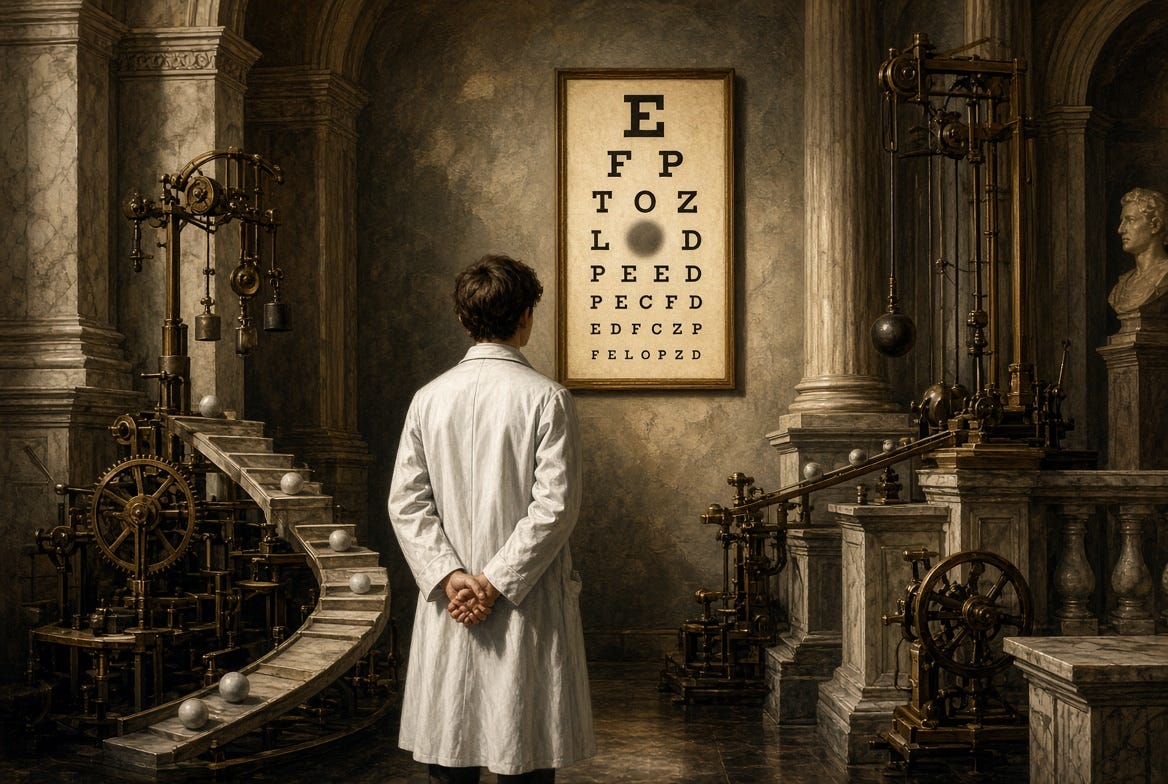
I was in my early 20s when I first noticed infrequent episodes of “scintillating scotoma”: for about 30 minutes the center of my vision flickers, like static on an old-fashioned TV set. The first time it happened I was worried enough to see a doctor, who told me it’s nothing serious when it fades quickly and comes back rarely. So I ignored it, for decades.
Then recently I described it to Claude, which convinced me it’s a form of migraine. In many people it’s the “aura” that precedes a bad headache. In my case it had always been painless. In fact, it’s even in the neurologists’ diagnostic manual: ICHD-3, filed under its own code: typical aura without headache. Migraine, minus the migraine. I know people who suffer terribly from migraines; count myself lucky.
What the notebook said
I’m a personal scientist, so I’ve kept a notebook for much of my life: sleep, exercise, anything health-related. Most of it is now machine-readable, so I asked Claude to search the whole archive for every mention. Here’s what I found:
First, it happens more than I thought. I’d have told you “a couple of times a year.” The notes held 15 documented episodes from 2022 through this September, five of them in 2024 alone. That’s about three a year, and probably an undercount, because I only write things down when I’m paying attention.
Second, I actually do get headaches. As I mentioned recently (PSWeek261008) most of my rare headaches are quite mild — barely worth mentioning in my notes. But upon checking my records, I noticed an odd coincidence: the rare times I get noteworthy headaches do seem to cluster within a few days of the aura.
Third, my original tidy stories didn’t add up. Over the years, I’ve had a few unexplained bouts of emesis (a medical way of saying I threw up). I had always assumed these episodes were caused by something I’d eaten—which I thought explained the accompanying headache as well. But looking at the long-term data showed that every one of these incidents came a day or two after the aura.
Aha! So now what?
When our teenage daughter started getting migraines, I did a deep dive into every possible cause, including EMF from cell towers (See PSWeek230706). We found a relationship with coffee: my theory is that caffeine is a “trigger”, and small daily doses can be preventative by resetting whatever buildup causes a full-blown attack. My own mother had frequent headaches when she was younger but never severe enough to call it a ‘migraine’; the last time she went a day without coffee was back in high school.
Upon learning that the M word might apply to me, I immediately re-examined my own coffee drinking. In my case (as noted in PSWeek261008) I thought my problem might be too much caffeine. For the past month I’ve greatly reduced my coffee drinking (“greatly”, meaning down from 6+ cups/day to below 4).
My auras are infrequent enough that it’ll take some time before I can figure out other possible mitigations. There are no easy n-of-1 experiments in these situations.
What I can do, however, is step up my note-taking and Claude analysis. I would never have figured out the migraine connection without my daily notes, and now I wish I had even more details. LLMs make it easier than ever to turn messy note-taking into actionable insights. Personal science used to require a spreadsheet for serious tracking; now you don’t even need that: just type/write/speak anything of interest that day and let your LLM deal with keeping it organized. (See PSWeek250502 for some basics)
Personal Science Weekly Readings
Speaking of caffeine, this is another chance to plug some good personal science work by Alex Chernavsky. His caffeine experiment at Self-Experiments.org is still the model for doing this properly. See also Michael Dickens, who ran three caffeine self-experiments, testing his reaction time daily to see whether he builds tolerance. tldr; nope.
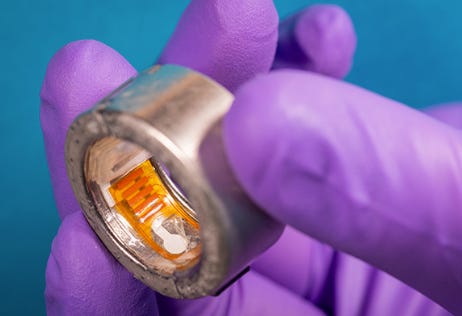
Meanwhile, mike_lustgarten is excited about a new smart ring from UC San Diego that continuously monitors biomarkers like glucose, ketones, vitamin C, uric acid, lactate, and alcohol.
Several people have commented on Google’s AMIE study in The Lancet, which at first glance looks like a breakthrough in AI medicine. Almost 100 real urgent-care patients chatted with the AI before their appointments and the AI got it right as often as clinicians. But you need to watch Vinay Prasad point out why the results are meaningless: doctors and patients are already using AI, and this study proves nothing.
One of my perennial complaints about “studies” is that they often seem like make-work for academics: something that in a business situation would be a memo, or at best a public blog post, for professional researchers turns into a big huge deal that takes years to make it to the rest of us.
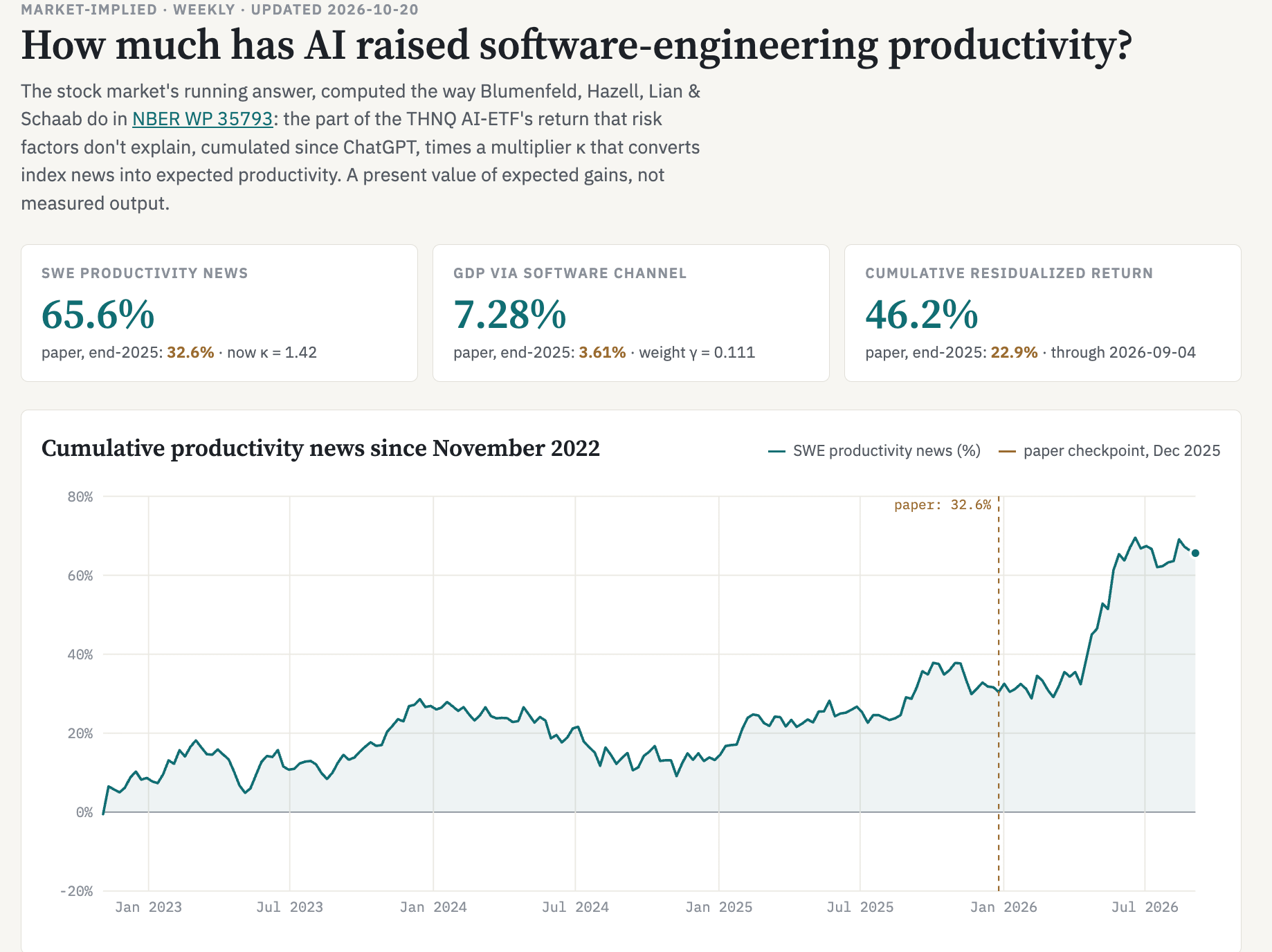
So I was annoyed this week when I saw how some professional economists at Berkeley and LSE recently published a paper (about measuring how AI is affecting US GDP), but their data only went through the end of 2025—ancient history in my world. For about $8 in Claude tokens, I replicated their results and using the same data sources updated to today. What’s cool is that you can now do this with any academic paper. Traditional peer-review is so dead. View the artifact here:
Speaking of how easy it is to write quality academic papers now, @james_y_zou launched the Evidence API, which searches 100M+ papers to find the strongest evidence for and against a claim. His example: does coffee reduce diabetes risk?
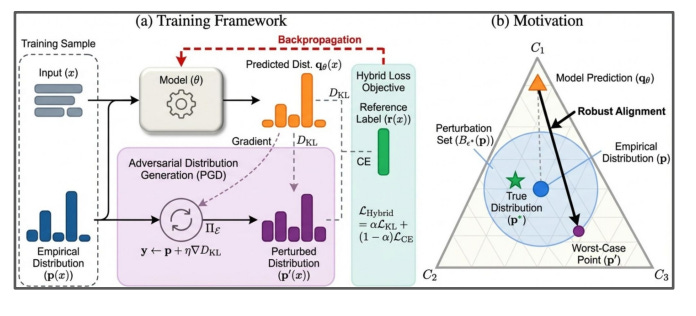
Also see @ClaesBackman: Practical AI for Academics. And @simplifyinAI points to Google’s free PaperBanana, which turns methodology text into academic illustrations.
About Personal Science
LLMs have transformed how each of us can study the world around us, and if you’re not already using them in your daily life, you’re missing an important tool.
Personal scientists apply the techniques of science, including skeptical open-mindedness, to understand items of everyday interest and solve problems.
If you have ideas you’d like to discuss, please let us know.