
There is always more to learn than we can post in a weekly summary.
This week we compile some links and other readings that we think are useful to personal scientists.
New Apps and Devices
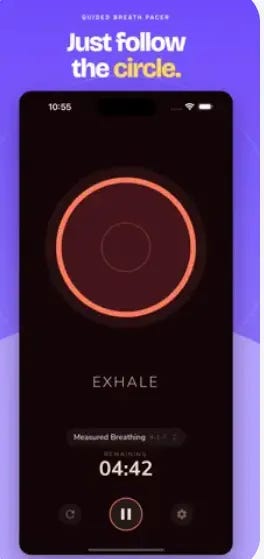
Bob Troia (aka Quantified Bob) has a new app, Awesome Breathing, to help guide and visualize your breathing: box breathing, Dirga Pranayama, 4-7-8 and other standard exercises that can help alleviate stress and get you to sleep faster. It’s free, funded by supporter contributions who find it helpful.
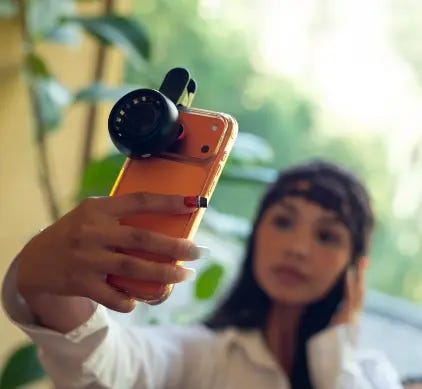
Lumeria Lumoscope is a $300 device (pre-orders) that connects to your smartphone and shines RGB, UV, and polarized light on your skin “to see what the naked eye can’t”. You take images of your skin and track other variables like sleep, hygiene, products you’re using, etc. and it recommend how to improve your skin. The company behind it is a Y Combinator startup.
Peer review by the rest of us
We mentioned refine.ink back in PSWeek260122 as a very detailed AI-powered academic paper reviewer and I’ve been meaning to try it. X user Ben Golub shows how he ripped apart a peer-reviewed article on Stanford’s Encyclopedia of Philosophy, finding numerous serious errors including citations that point to the opposite conclusion and basic problems with reasoning. AI will make it nearly impossible future academics to get away with sloppy papers.

An open-source project Feynman is a collection of tools to do something similar: Read papers, research and get cited meta-analysis for your question. It also comes with Claude Skills so you can use it from within your existing Claude workflow.
Following Up
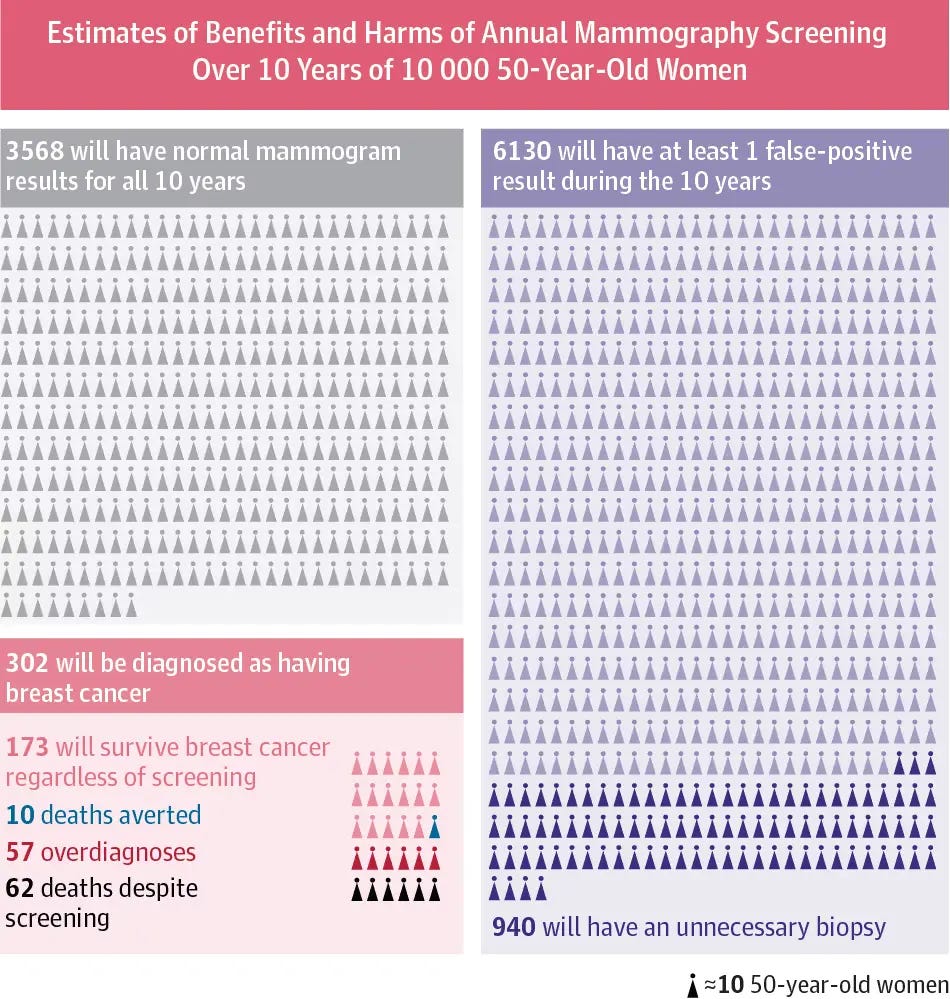
Back in PSWeek230921 we discussed cancer diagnostics and how many of the screening tests are so inaccurate as to be counter-productive. Tablet Magazine argues that mammography screening is overdone and uses this great graphic from a 2014 JAMA paper that illustrates the benefits and harms of mammography screening:
We’ve written about caffeine over the years (See PSWeek241010 and PSWeek230622) but not about ways to reduce its effects. Astral Codex Ten on The Quest For Caffeine You Can Have At Night has a great breakdown of several over-the-counter supplements that claim to help you sleep even if you’d had too much coffee. The pills have three main approaches: (1) supercharge the enzyme that normally metabolize caffeine, at potential cost of liver function, (2) skip coffee and take the stimulating chemical directly, and (3) use a caffeine-like molecule that gives you a shorter period of alertness. They all come with tradeoffs, but various personal scientists have tried each and this is a nice summary of the results.
About Personal Science
Personal scientists are skeptical about everything, so we aren’t bothered when experts can’t seem to agree. But that’s not an excuse for giving up. We have to believe something. The question is how to decide.
Economist Arnold Kling says “we decide what to believe by deciding who to believe”. Maybe you trust “our democratically elected government” and the (presumably neutral and science-minded) people they appoint at FDA, CDC, and other regulatory agencies. But you also trust other reputable organizations and their leaders. What do you do when your trusted sources disagree with one another?
Personal science says there’s only one way out of this conundrum: learn to apply the techniques of science to your everyday situations. Philosopher of science Michael Strevens summarizes this as a trust in (1) raw data, (2) good collection methods, and (3) logic to tie it together. (See PSWeek221229)
This newsletter is a weekly summary of ideas and techniques that we hope will help others who want to get better at personal science. If you have additional thoughts or topics you’d like to discuss, please let us know.