
You can’t be a personal scientist these days without extensively using LLMs. Long-time readers know that we’ve been using ChatGPT, Claude, and other LLMs from the beginning, but the situation changes so quickly that anything you thought was true six months ago needs to be updated.
This week I’ll summarize some of the tips and tricks I’ve learned while using Claude Code and other LLMs.
By now pretty much everyone has used ChatGPT and its cousins, including my favorite LLM Claude. But most people still use it as a “better Google”, a convenient way to get a quick answer to a specific question without the need to click through to another site. If this is how you use it, you may not even see the need to upgrade to the paid version, since most of the answers are adequate—at least as good as what you get from Google. And even an old-fashioned Google search now gives you an “AI Overview”. If the free version is good enough, why bother with more?
Oh boy, to answer that question where do I start?! I subscribe to the Claude Max plan (either $100 or $200 / month), so my actual cost is capped, but here’s what it would cost me just last week if I had to pay by the token. (A ‘token’ is the unit for how LLMs process information. It’s a little complicated but you can think of it as slightly smaller than a word or about 4 English characters; a typical issue of PSWeek runs about 2000 tokens.
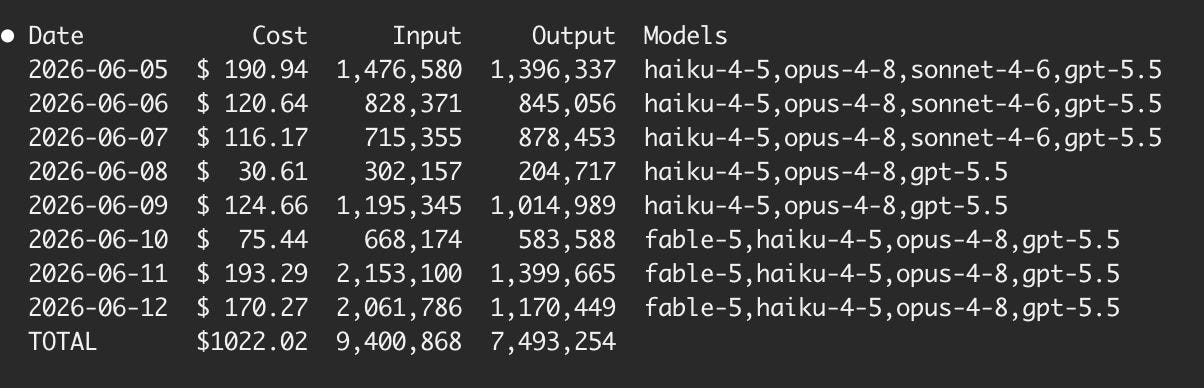
How did I use up that many tokens in a single week? Here’s a brief overview
How I use Claude
The first rule of effectively using an LLM is give it as much context as possible. If you only do Q&A-style prompting from the chatbot interface, the amount of help it can offer is limited to what you can type. I first started using Claude Code last summer (see PSWeek250710) because it makes it easy to add hundreds and thousands of additional documents to every prompt. Your computer is probably organized around folders full of related documents (e.g. taxes, photos, budgets, health records, etc.). Claude code lets you use the entire folder as the context for every prompt. When I ask Claude a health-related question, for example, it has access to every single medical record, including images, PDFs, spreadsheets; it takes all of that into account when it gives the answer.

Tips and Tricks
A few basic suggestions that will greatly multiply the usability of Claude, ChatGPT, Grok, or any other chatbot:
Customize! Every chatbot allows you to personalize your experience. Do it! Go to settings and introduce yourself and your priorities for how to get the most out of the system. I tell each of my chatbots as much about myself as I can (age, bio, interests). My Claude Code repos include very detailed claude.md files that make explicit every aspect of the project.
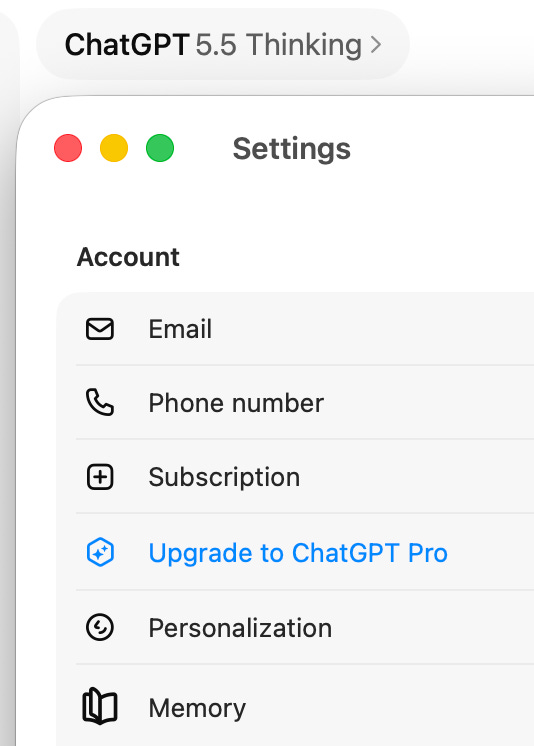
Use the terminal. You’re getting only a fraction of an LLMs power if you continue to exclusively use the desktop or mobile app. Claude CoWork is a reasonable substitute for a while, but trust me: nothing beats the terminal. Don’t know how to start? then…
Ask for help! One of the simplest tricks that people forget is that Claude knows way more than you do about how to use Claude. Chatbots reward people who just ask, simple, “How can I work with you more efficiently”. “Help me get started with a terminal”.
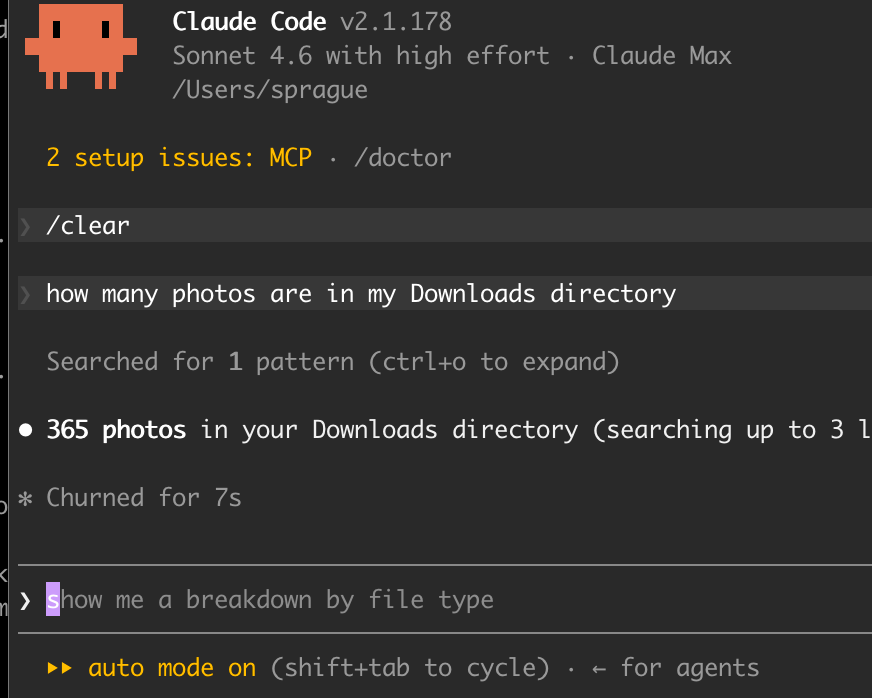
Compact! LLMs at heart are nothing more than a fancy auto-complete. When you hit ‘submit’ you are sending the entire conversation—not just the latest question—over to the LLM. If you start with a 100-token question and it answers with a 1000-token response, asking a 200-token followup question will actually send 100+1000+200=1300 tokens. That will compound with every interaction. So to save tokens, the best thing you can do is regularly clear the memory and start over on a new thread as often as possible.
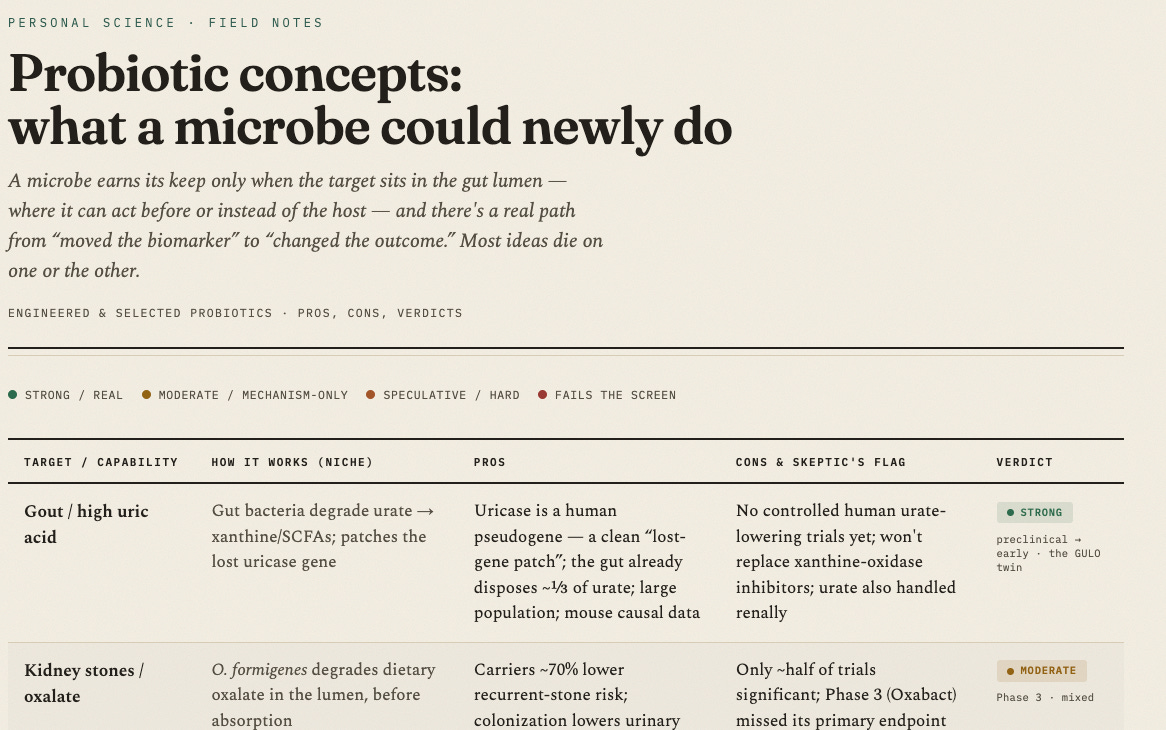
Ask to generate html. LLMs normally give results in plain or markdown text, but if you want to share your results, ask Claude to turn it into a pretty-formatted html page that you can copy/paste into email.
For example, I recently attended a networking and brainstorming session at the excellent Idea Factory at Compound VC in New York. Each participant was asked to come with a few ‘breakthrough’ ideas to kick things off, so I generated a proposal for ‘exotic’ probiotics.
Use Skills. When you find yourself repeating the same task over and over, ask Claude to turn it into a skill. These are self-contained packages of instructions (including code) that make it easier to do something that would otherwise require lots of repeated explaining.
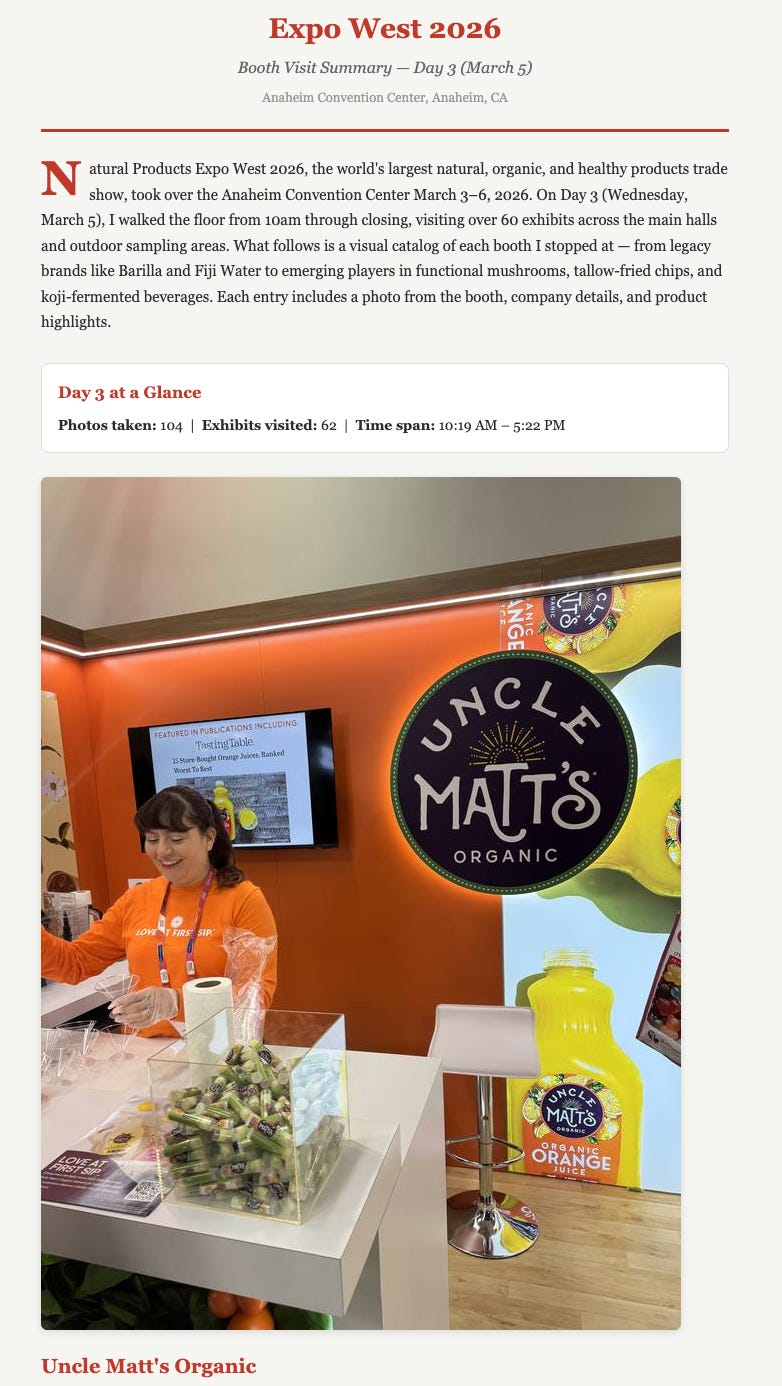
I’ve published several of my most useful skills here: Proofbound.com/workshop. One of my favorites is Conference Booth Report: Point to a folder of photos taken at conference booths and get a summary like this one
Personal Science Weekly Readings
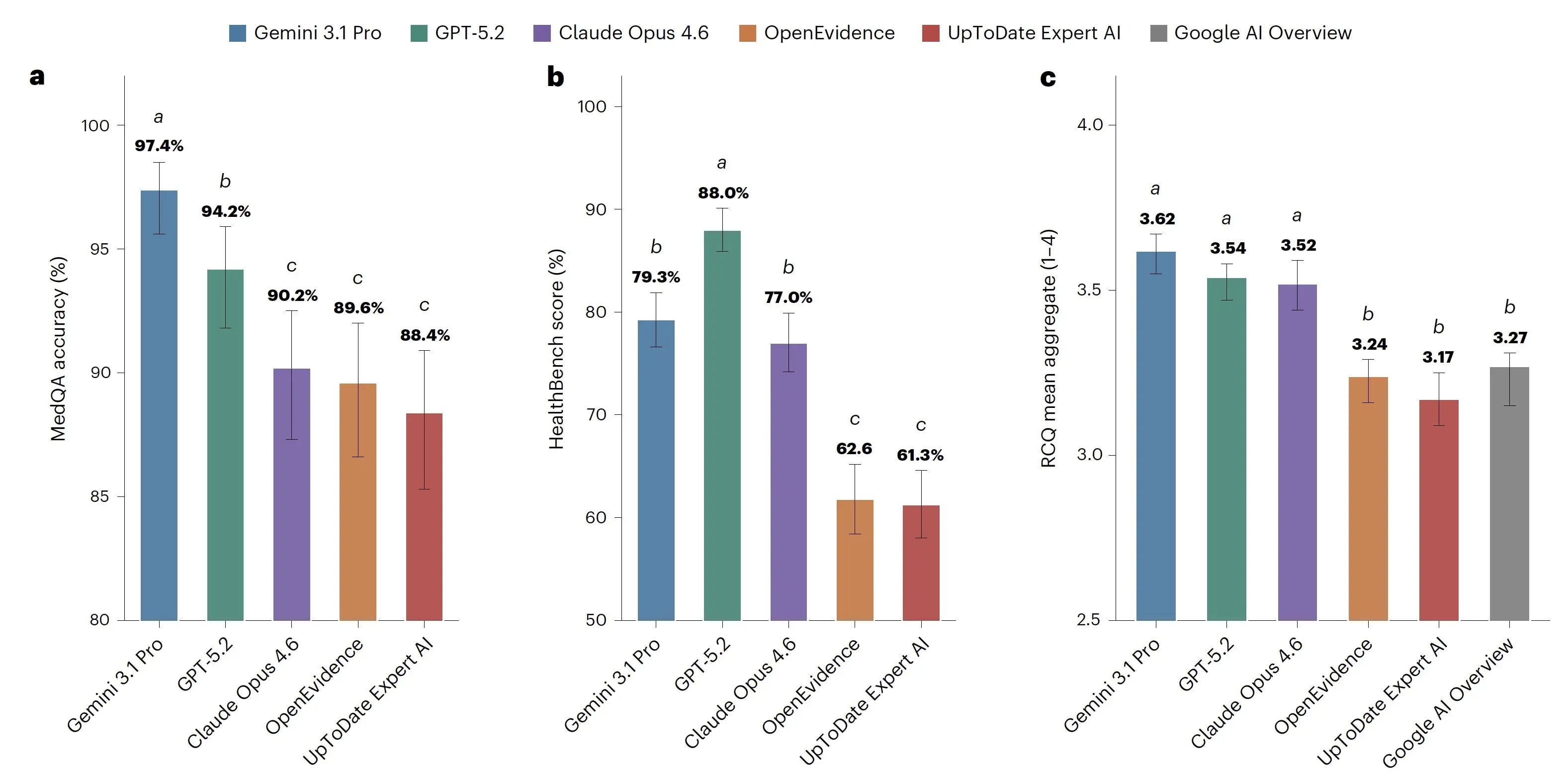
Speaking of LLMs, back in PSWeek260423 we discussed OpenEvidence, a doctor-exclusive search engine for heavy-duty medical questions. Now a large study published in Nature Medicine claims that off-the-shelf LLMs like Gemini and Claude out-perform OpenEvidence and a similar one from UpToDate. No so fast, says @adamrodmanmd: it’s really hard to measure the ‘correct’ answer on some of these tricky medical questions, and ultimately what really matters is how effective you are at prompting. My opinion: stick with Claude. The frontier LLMs are getting better, faster, and any temporary advantage of the specialized LLMs will be overtaken by the better UX and tools available to the general-purpose ones.
For years, cancer researchers have studied p16-INK4a, a protein involved in a tumor suppression, also considered a key biomarker of aging. But now, Sholto David found, hundreds of papers have been published using the wrong antibody, apparently because it’s easy for labs to mistakenly order from suppliers another, incorrect p16 antibody instead.
Calcium and vitamin D probably aren’t saving your bones. A new BMJ systematic review (Massé et al., 2026) pooled 69 randomized trials and 153,902 participants and found little to no effect of calcium, vitamin D, or the combination on fractures or falls.
About Personal Science
Professional scientists have fancy degrees and spent their time writing grant proposals. Personal scientists skip all that overhead and focus on what really matters to our everyday lives: practical, experimentally-based answers to questions and solutions to problems.
If you have questions or comments about personal science, let us know.
I use Claude, but I don't know as much about it as you do. I'm confused about how much information Claude can hold in its "working memory" (not sure if that's the right term). You wrote: "When I ask Claude a health-related question, for example, it has access to every single medical record, including images, PDFs, spreadsheets; it takes all of that into account when it gives the answer." But later you wrote: "to save tokens, the best thing you can do is regularly clear the memory and start over on a new thread as often as possible.". Surely a folder full of PDFs and other documents would consume a whole lot of tokens? Can Claude retain all that information in working memory while also engaging in a conversation with you about some topic related to your health?
How do you ask Claude to summarize a current thread so you can start a new thread but still have the context? Also how do you save summaries so you can build a knowledge base?
I understand how to share files with Claude, and how to create skills, but I guess I’m still a little confused how I can build a shared context with AI so not always starting from scratch.