
It’s the new, best book ever written on how to get started with personal science. Everyone who reads this weekly Substack will be interested.
This week I’ll describe my takeaways, along with some thoughts about where personal science is heading.
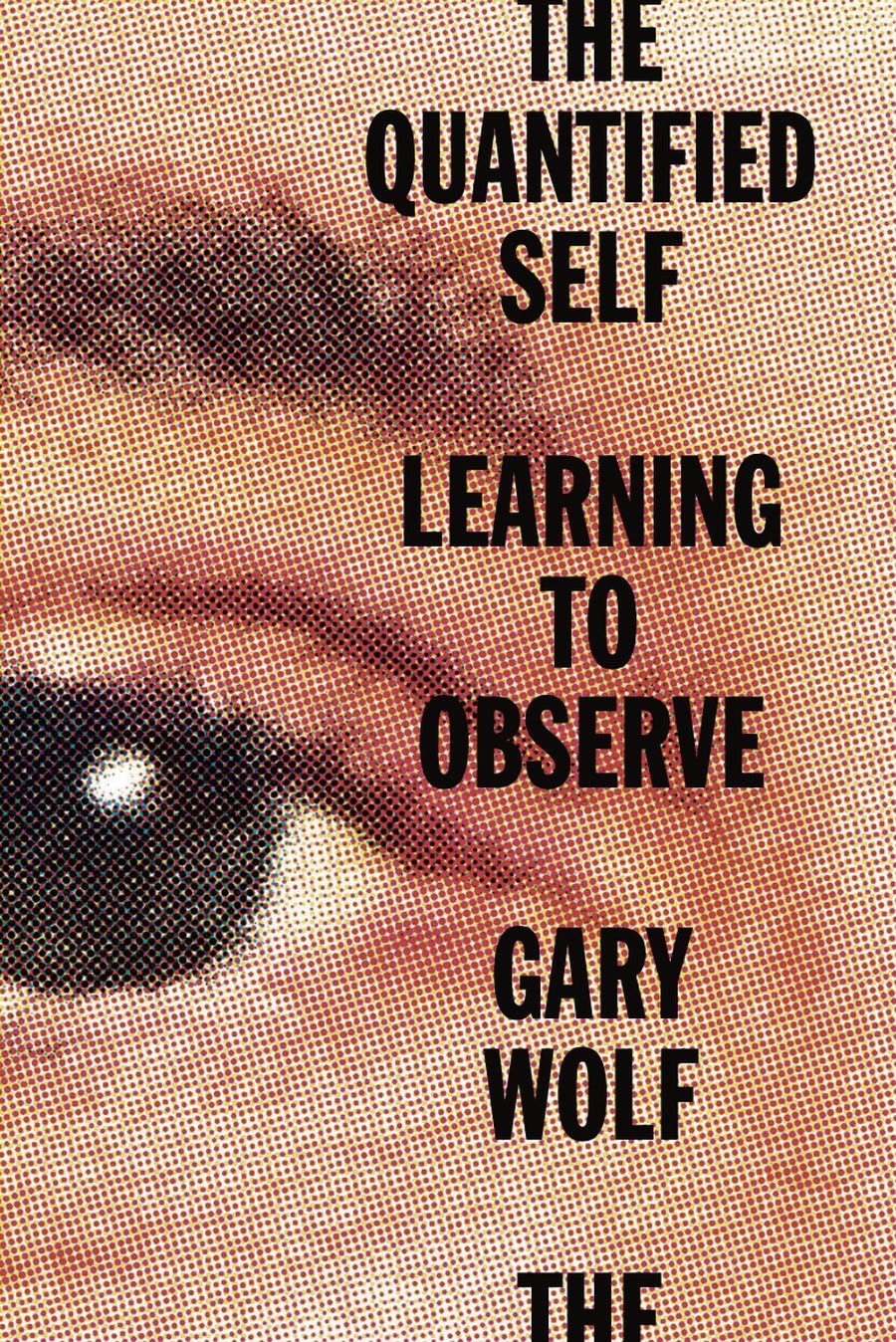
Workman Publishing Company, the people who brought you titles like What to Expect When You’re Expecting and 1,000 Places to See Before You Die, are known for their practical, well-designed books that are as good for skimming as they are for reading cover-to-cover. The Quantified Self: Learning to Observe by Gary Wolf is a perfect fit for that genre.
Long-time readers may recognize it. This is a heavily revised and expanded version of Personal Science: Learning to Observe, which Gary self-published with a group of collaborators in 2022, and which I reviewed for NEO.LIFE and recommended here at the time. The new edition is reorganized around everyday health questions, with every chart redrawn in a single consistent style.
As the co-founder of the original Quantified Self movement in 2008, Gary draws on decades of experience watching people practice “everyday science” at countless Quantified Self gatherings around the world. The Quantified Self website is the de facto home page for beginners and experts who want to know more about self-tracking, self-research, and personal science. You can think of this book as a well-curated summary of the best of Quantified Self.
The heart of The Quantified Self: Learning to Observe is this framework, a streamlined version of the five-step cycle Gary and Martijn de Groot first published in a 2020 paper: (1) start with a good question, (2) observe carefully and write down what you see, (3) reason about what your observations do and don’t show, and (4) explain what you found, which means committing to a causal story that could turn out to be wrong. Importantly, this is a loop, not a one-and-done process, so each answer leads to another question, more observations, more reasoning and explanations, and yet more questions.
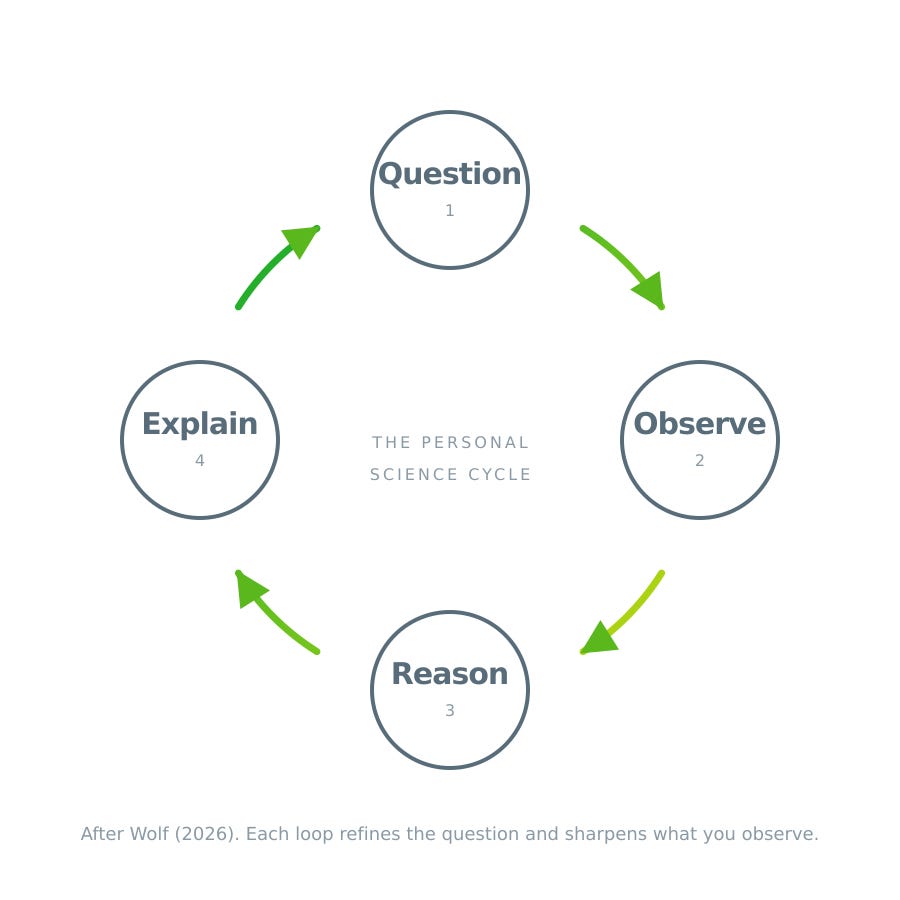
The first three chapters lay out the method, including ten “reasoning patterns” adapted from the history of science. The remaining eight are organized into broad topics (e.g. “Pain and Recovery”, “Sleep and Dreaming”, “Hormones”) and revolve around case studies, taken from real people who presented at hundreds of Quantified Self “Show and Tell” talks since 2008. Each case study illustrates one of the 48 “Practice Tips” that are the book’s main takeaway.
Patty, for example, traced her digestive issues to reheated rice after simply tracking the specifics of her diet for three weeks (p. 189):
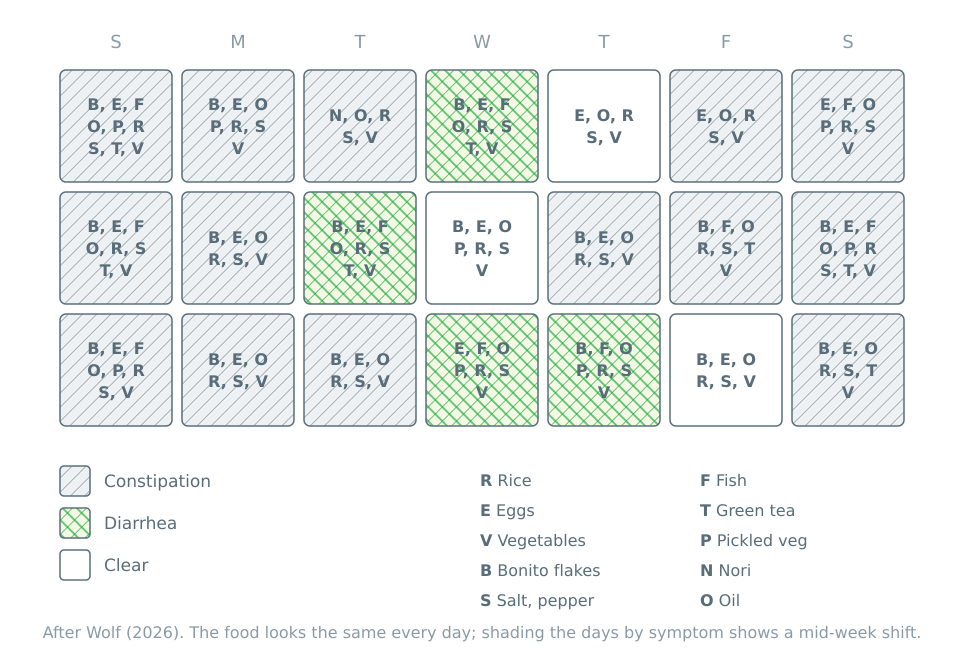
The lesson in this case is distilled into “Practice Tip 26: Look Beyond Ingredients”. Notice that her ingredient list barely changes from day to day, which is exactly why ingredients alone couldn’t explain anything. Cast a wide net when diet tracking; look at timing, pace of meals, method of preparation. Logging meals this way let Patty figure out that her diarrhea clustered midweek, when she used a microwave at the office. Reheated rice is different from freshly cooked—and in her case that was enough to cause her trouble.
And on and on...you’ll find page after page of similar well-told examples of people solving everyday problems. “Counting Lucid Dreams”, “Shyness and Social Anxiety”, “Triggers of Arrhythmia”, “Fertility Awareness”, “Climate and Eczema”, “Does Spirulina Improve My Hay Fever”—dozens of specific topics, each illustrating one of the Practice Tips. An appendix, “Guide to the Practice Tips”, helpfully summarizes all 48 tips by topic and example.
What not to expect
This is a book for “normal people”, not biohackers or longevity types. You won’t find advice about the best peptides, or red light therapy or grounding or rapamycin. Even the case study on microdosing (in the chapter on “Mood, Emotion, and Stress”) is there to illustrate “Practice Tip 13: Test in Sequence”, not to weigh in on the pros and cons of this particular intervention. Nothing here needs one of those “consult with your health professional” legal disclaimers.
Similarly, “personal science” in this book means “health and wellness”. That focus means skipping applications of empirical methods to cooking or gardening, or to the natural world in, say, birding or whale watching (what’s often called “citizen science”). Quantified Self meetups have featured talks on everything from personal finance (money) and productivity to cool new gadgets. The closest you’ll find to productivity tips here is a case study on counting emails in the chapter on “Focus and Cognition”.
Finally, there is no references section and no footnotes or citations. Sure, I can always Google to find the source of that Nature reference to hair growth (p. 232), but I would have liked a curated list of “further reading”. Gary’s a smart guy whose recommendations I respect; I would like to see his suggestions.
What about AI?
Ten years ago this book would have been indispensable. Today LLMs change everything about the practical details of personal science, and it’s reasonable to wonder whether a traditional standalone book is really the best way to present this material. Should the case studies and tips come with an online version where you can plug in your own data? It would be easy to release this book as an app, or as a ChatGPT plugin that can suck in all my own data and recommend which of the tips apply to me. Sooner rather than later, I expect most LLMs will automatically include an empirical, personal science-based approach to every relevant conversation.
Of course, much of the book already anticipates this. For example, Hiro is a migraine sufferer who doesn’t feel up to writing down his headache episodes; “Practice Tip 8: Speak Your Measurements”: just let your phone do it. And anyone familiar with LLMs will find it easy to customize and reproduce any of the examples, including the more sophisticated plots that a few years ago required hefty programming skills.
On the other hand, because chatbots have answers for everything, it’s more important than ever to ask the right questions. If you’re serious about personal science, having a concise, well-curated selection of ideas and suggestions is the main reason you need this book.
About Personal Science
Every Thursday we publish this weekly summary of thoughts and ideas about how to apply the methods of science to everyday situations. It’s personal science because we believe that you don’t need specialized credentials or training—you don’t need to be a professional—to learn more about your world. We’re skeptical when people insist that you just “listen to the experts”, because we know that experts are often wrong, and no expert cares as much about you and your loved ones as you do.
Most importantly, we believe Nobel Prizewinner Richard Feynman: “The first principle is that you must not fool yourself and you are the easiest person to fool.”
If you any corrections or comments, or other topics you’d like to discuss, please let us know.