
Each January, Las Vegas hosts the most important gadget show in the industry, with thousands of companies introducing new products ranging from driverless cars and home robots to useful new health and personal monitoring gizmos.
This week I’ll briefly summarize a few of the devices I saw that might be interesting to personal scientists.
The annual Consumer Electronics Show is a zoo. For a city that lives on hosting big conventions, it’s the biggest one of the year with almost 150,000 attendees, every one of whom needs a place to stay, something to eat, and a way to get around. It’s the first time in my life I’ve experienced a cellular network outage; the Uber app actually told me its network was over capacity and I’d have to retry later. Unbelievable.
All those people descend on Las Vegas to glimpse the latest-greatest consumer products, as thousands of aspiring companies bring their best for three grueling days of demos and talks. I’ve been to CES a few times, so I already knew it’s more efficient to stay home and watch the news coverage, where you can see the same companies and demos captured by people paid to attend and summarize the best of what they see. Sadly, this year I had to bite the bullet and attend in person. After crawling through hundreds of exhibition booths spread over dozens of football-sized show floors, I know I barely scratched the surface—so my summary here is just a brief look at a few products that caught my eye as being of interest to personal scientists.
Bionic Legs: The E-Bike for Walking
The most impressive product for me was the Dephy Sidekick, a powered ankle wearable that comes with special shoes to augment your walking. At around $4,000, it’s not cheap, but the company has spent years selling to rehabilitation facilities and is now pivoting to consumers. It’s basically the e-bike equivalent for your legs: not replacing your own effort, just giving you a boost when you need it.
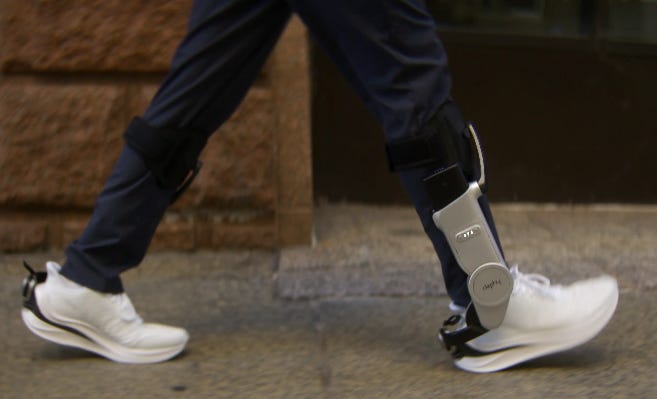
Workers on their feet all day, hikers wanting extra range, anyone with aging knees who wants to stay active. When you try it, your first reaction is a little like floating: with each step you feel a little push-back that makes it feel like you’re not really walking. The company claims the batteries last for four hours.
Another company, Dnsys, went bigger with full exoskeleton legs under the tagline “Upgrade Humans.” They had a walking track at their booth where attendees could try them out. These use motors strapped to your knees and thighs, reducing strain when walking or climbing. I can imagine these becoming popular for long-distance hiking.
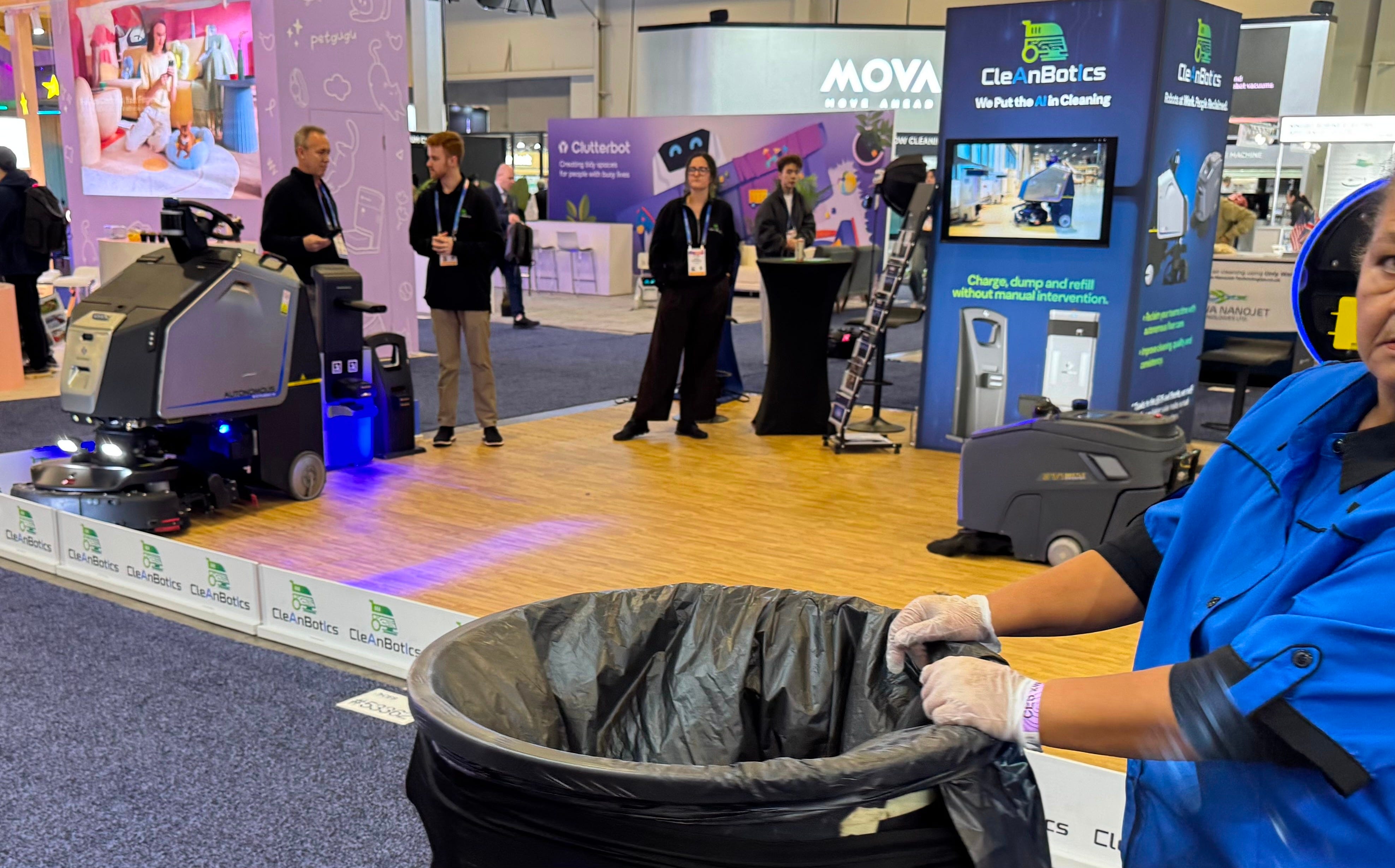
And speaking of turning into robots, CES was covered with companies that basically want to automate everything in the physical world. I admit feeling a little sad to see the regular exhibit hall janitorial crew working amid the high-tech gadgets that you know are coming for their jobs.
Personal Hygiene Tech
Several booths focused on reimagining everyday hygiene routines, some more plausibly than others.
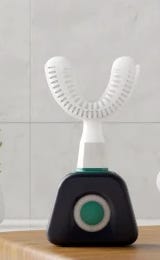
Y-Brush is an $80 French product that promises to brush your teeth in 10-20 seconds using a Y-shaped silicone mouthpiece that fits over all your teeth simultaneously. Sonic vibration does the work. Sounds appealing—makes brushing faster and easier—though I think they’ll have a hard time getting people to change such a basic habit.
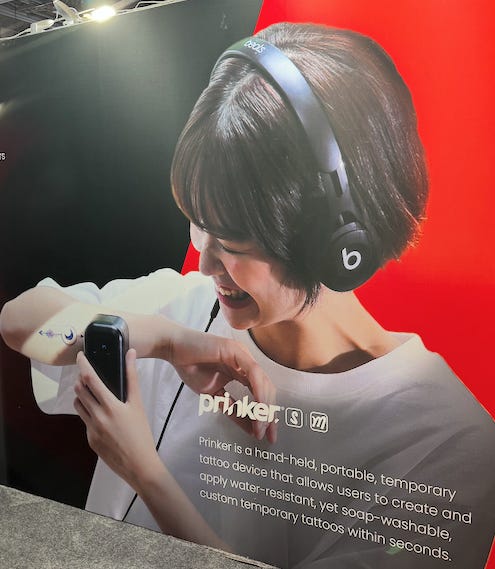
One product that I hope takes off is the $200 Prinker portable temporary tattoo printer. I mean, if you really want to get a tattoo, go for a trial run first. And this one has another advantage: cosmetic applications. Color-matching for skin imperfections, scars, or vitiligo. For personal scientists interested in non-permanent body modification, this seems like a good place to start.
I saw several vendors selling products to turn your bathroom into a private biolab. Pondo offers a toilet-mounted AI device that analyzes stool and hydration levels, delivering insights to your phone—”your gut feeling, now backed by gut data.” Starling Medical’s “Pete” does something similar for urine, optimized for UTI detection, at around $200-300 with insurance often covering the cost.
Speculative Science
Every CES has products that blend ancient practices with modern technology, hoping the combination yields credibility. Two caught my attention—not because I necessarily think they work—but because personal scientists might actually be positioned to test them.
IriHealth from Korea offers AI-powered iris analysis based on iridology, a 3,000-year-old practice claiming the iris reflects the health of internal organs. They claim to have trained their image analysis algorithm on thousands of iris images, yielding a useful diagnostic signal. I’m skeptical — the practicing iridologists I’ve met seem more like astrologers to me—but the CEO seems to know his stuff on both biology and AI, so I’m open-minded.
RaDoTech takes a similar approach with acupuncture meridians. Their handheld device claims to assess internal organ health by scanning “bio-electric current” at acupuncture points. They won a CES Innovation Award, which tells you something about how those awards work. I have the same personal science skepticism here : ancient practice plus modern gadgetry doesn’t equal evidence. But again—if a somebody tracks RaDoTech readings against validated health markers over time, we’d learn something, even if that something is “this doesn’t work.”
Other Notable Finds
A few quick mentions:
Withings Body Scan 2 ($600) continues that company’s evolution from simple smart scales to comprehensive body composition analysis: segmental measurements, vascular age estimation, even nerve health assessment. Oh, and like everything else these days, it’s advertised as a “longevity” product.
Elemind offers a $400 acoustic stimulation headband for sleep optimization. It detects when your brain has fallen into deep sleep and then it fires an acoustic signal that claims to enhance your sleep. They claim 15 years of research and clinical trials showing 76% of participants fall asleep significantly faster.
Vagus nerve stimulation devices were everywhere—at least three vendors (Zenowell, Pulsetto, OhmBody) targeting stress, sleep, pain, and focus. It’s a crowded category with real science behind it, though the consumer claims often outrun the evidence. I’ll cover VNS separately in a future post.
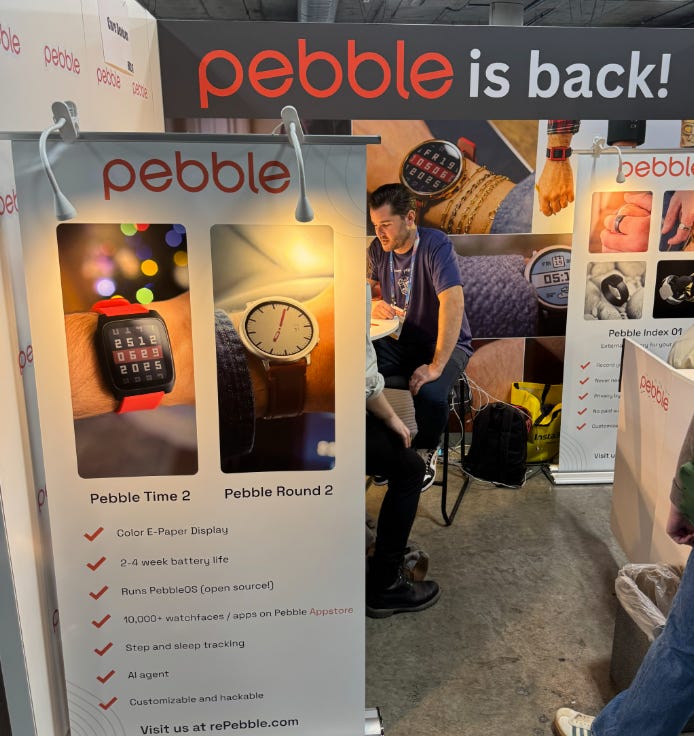
And finally: Pebble is back. The beloved open-source smartwatch platform has returned with new models.
Healthtech Sessions
CES also features tons of keynotes and talks, but the best one I attended was “Always On: How Continuous Health Data is Transforming Care," featuring CEOs from Dexcom, Oura, and Rimidi. As you’d expect, despite these companies all doing data collection, they emphasize the importance of actionable takeaways. Tom Hale of Oura argued that wearables save clinicians time by enhancing patient self-awareness; when people arrive already informed about their own patterns, doctors can ask better, targeted questions. I liked the responses when somebody asked the panelists for sensor data they wish they could collect: blood pressure, kidney function, and hormones continuously. In general, good sensors are about "making the invisible visible." But the best advice came at the end: "DWYMTY"—Do What Your Mother Told You. Eat well, sleep, exercise. All the biosensors in the world won't help if you ignore the basics.

About Personal Science
Personal scientists believe in using the tools and methods of science for personal rather than professional reasons. We’re curious about the world around us and prefer to run our own experiments when possible, always maintaining healthy skepticism about expert claims, no matter the source.
CES is designed to overwhelm you with novelty and promise. For personal scientists, that just means more questions: What can I actually measure? How would I know if it works? And am I willing to be the experiment?
We publish this short newsletter each Thursday for anyone who likes to use science in their daily lives. If you have other topics you’d like to discuss, please let us know.
Great post. I've had a very similar toothbrush which actually moves to clean the teeth. Maybe this one is better, add I haven't ended up using the one I have regularly
Good day. Thank you for reviewing RaDoTech health tracking, FDA registered device. Just to point out few discrepancies - RaDoTech based on proven technology and is FDA registered. You can check it out on FDA website - https://www.accessdata.fda.gov/scripts/cdrh/cfdocs/cfRL/rl.cfm?lid=976204&lpcd=HCC
Further more - RaDoTech Health Tracking device reviewed by doctors and used by MD`s, Holistic doctors and wellness experts, along with consumer clients for personal use and health tracking.
You are more then welcome to our booth at CES 2027 for personal experience - we will provide you testing for free.
All the best and good luck. Thank you for your work.